Developing a High-Performing Designer
Turning around performance: A case study in servant leadership, emotional intelligence, and human-centric management.
- Role:
Product Design Manager
Overview:
Early in my leadership journey, I was challenged with a task of developing a member of the team that was considered a low-performer.
Problem:
One of my reports was struggling significantly: low motivation, missed deadlines, lack of communication, and visible disengagement. They were at risk of leaving the company entirely – frustrated, disconnected, and feeling unseen. It was clear this wasn’t a matter of skill, but of support, structure, and trust. I saw an opportunity to intervene not just as a manager, but as a coach and mentor.
Challenges
It took time for them to open up and accept help. Early on, there was hesitancy in feedback sessions and avoidance of visibility.
While the coaching was ongoing, I still needed to ensure product timelines were met – requiring clear prioritization and expectation management with stakeholders
Other team members had formed biases due to past performance. Part of the process was also rebuilding peer trust and collaboration dynamics.
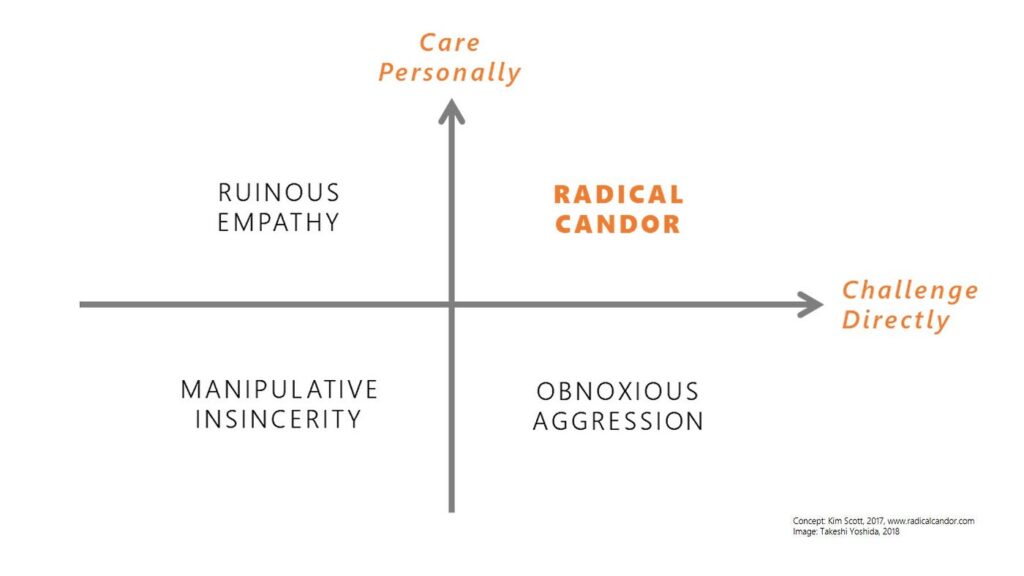
Kim Scott's Framework
What I did
Created a tailored coaching path focused on clarity, confidence, and ownership – blending short-term delivery goals with long-term personal growth objectives.
Using Kim Scott’s framework, I held regular 1:1s with direct, compassionate feedback, balancing accountability with genuine care.
Encouraged autonomy, reduced micromanagement, and created a safe space for vulnerability and honest reflection – inspired by Daniel Goleman’s principles on self-awareness and motivation.
Reinforced progress weekly, highlighting improvements in communication, delivery, and stakeholder feedback – helping them rebuild self-confidence over time.
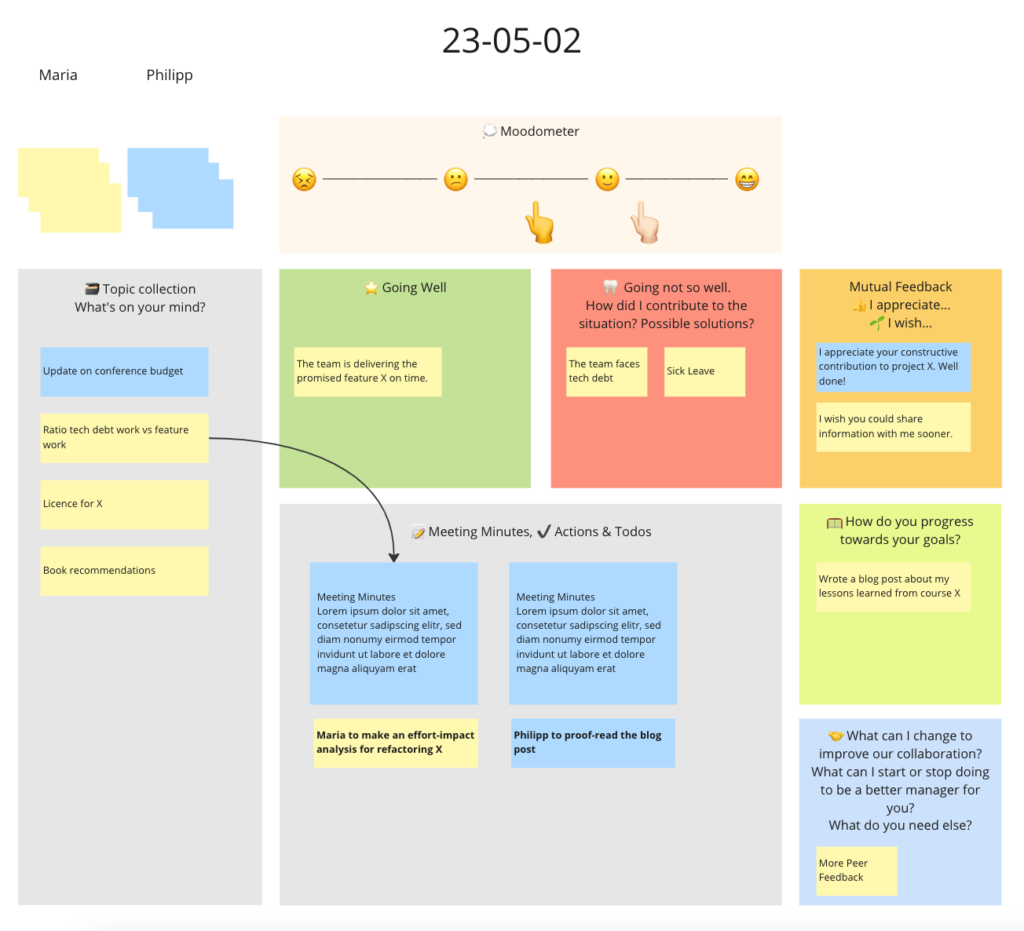
I adapted standard feedback models into a custom 'Weekly Reflection' board that allowed us to visualize emotional blockers before they impacted work. (this is a generic board).
Results
Designer Growth:
Increased on-time delivery from ~50% to 95% and reduced revisions per task significantly, becoming more autonomous and collaborative, recognized with an “All-Star” award by the end of 2024.
Career Advancement:
Their evolution led to a well-deserved raise and a stronger design voice in high-impact projects. Their solutions were praised by product and engineering peers.
Leadership Recognition:
I was awarded MVP of the year, with explicit recognition from my leadership team for transforming team dynamics and coaching excellence.
Increased on-delivery time by
Awards Won
Want to know more and see some more details?
This project is under NDA. All data, company names, and specific interface designs have been obfuscated, generalized, or omitted to protect client confidentiality. The process and strategic learnings shared here reflect my personal contribution to the project.
Contact me on rick@rocharca.com if you want to know more about it.